Blog
Items filtered by date: April 2019
Monday, 29 April 2019 00:00
Sever’s Disease and Children
 Sever’s disease only affects children because it involves the growth plate in the heel, which is not fully developed in childhood. The growth plate is weaker than the rest of the bone, so continual pressure or injury can lead to swelling and irritation. Therefore, sports are a common cause for children developing Sever’s disease. Symptoms of this condition are swelling and redness of the heel, stiffness in the feet, limping, and heel pain. Symptoms tend to become worse during or after activities, then get better with rest. If a child participates in sporting activities, then develops Sever’s disease, they should wait until after being treated to resume those activities. If you think your child may have Sever’s disease, then it is recommended you bring them to a podiatrist in order to receive appropriate treatment.
Sever's disease often occurs in children and teens. If your child is experiencing foot or ankle pain, see one of our podiatrists from Romeo Foot & Ankle Clinic. Our doctors can treat your child’s foot and ankle needs.
Sever’s Disease
Sever’s disease is also known as calcaneal apophysitis, which is a medical condition that causes heel pain I none or both feet. The disease is known to affect children between the ages of 8 and 14.
Sever’s disease occurs when part of the child’s heel known as the growth plate (calcaneal epiphysis) is attached to the Achilles tendon. This area can suffer injury when the muscles and tendons of the growing foot do not keep pace with bone growth. Therefore, the constant pain which one experiences at the back of the heel will make the child unable to put any weight on the heel. The child is then forced to walk on their toes.
Symptoms
Acute pain – Pain associated with Sever’s disease is usually felt in the heel when the child engages in physical activity such as walking, jumping and or running.
Highly active – Children who are very active are among the most susceptible in experiencing Sever’s disease, because of the stress and tension placed on their feet.
If you have any questions, please feel free to contact our offices located in Washington and Shelby Townships, MI . We offer the newest diagnostic and treatment technologies for all your foot and ankle injuries.
Tuesday, 23 April 2019 00:00
Types and Causes of Heel Pain
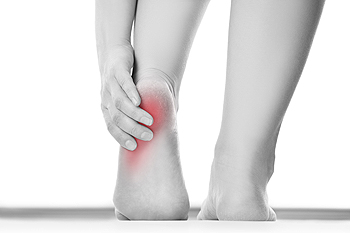 The heel of the foot is sometimes referred to as the “hindfoot", and consists of various types of tissues. If damage should occur to these group of tissues, the result may be heel pain. Research has indicated there are several kinds of heel pain, including plantar fasciitis, Achilles tendonitis, and nerve disorders. The former will often cause pain that is typically worse as the first steps are taken in the morning and may improve if proper foot stretches are performed. The Achilles tendon connects the calf muscles to the heel. If this should become torn as a result of an injury, Achilles tendonitis will develop. This is often treated with physical therapy, or by wearing orthotics. It is common for many diabetic patients to experience nerve disorders, and heel pain can develop as a result of having peripheral neuropathy. If you have any type of heel pain, it is suggested to counsel with a podiatrist who can perform a proper diagnosis and begin correct treatment techniques.
Many people suffer from bouts of heel pain. For more information, contact one of our podiatrists of Romeo Foot & Ankle Clinic. Our doctors can provide the care you need to keep you pain-free and on your feet.
Causes of Heel Pain
Heel pain is often associated with plantar fasciitis. The plantar fascia is a band of tissues that extends along the bottom of the foot. A rip or tear in this ligament can cause inflammation of the tissue.
Achilles tendonitis is another cause of heel pain. Inflammation of the Achilles tendon will cause pain from fractures and muscle tearing. Lack of flexibility is also another symptom.
Heel spurs are another cause of pain. When the tissues of the plantar fascia undergo a great deal of stress, it can lead to ligament separation from the heel bone, causing heel spurs.
Why Might Heel Pain Occur?
- Wearing ill-fitting shoes
- Wearing non-supportive shoes
- Weight change
- Excessive running
Treatments
Heel pain should be treated as soon as possible for immediate results. Keeping your feet in a stress-free environment will help. If you suffer from Achilles tendonitis or plantar fasciitis, applying ice will reduce the swelling. Stretching before an exercise like running will help the muscles. Using all these tips will help make heel pain a condition of the past.
If you have any questions please contact our offices located in Washington and Shelby Townships, MI . We offer the newest diagnostic and treatment technologies for all your foot and ankle needs.
Monday, 22 April 2019 00:00
Reminder: When Was the Last Time...?

Custom orthotics, or shoe inserts, should be periodically replaced. Orthotics must fit properly to give you the best results. Protect your feet and ankles!
Monday, 15 April 2019 00:00
Where Are the Sesamoid Bones Located?
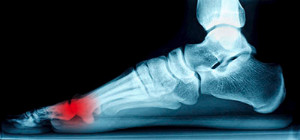 There are two bones that are located under the joint at the bottom of the big toe. These are referred to as the sesamoid bones. If they should suffer an injury or become inflamed from overuse, a condition known as sesamoiditis may occur. The symptoms associated with this ailment may include pain while walking or running, and discomfort when the big toe is pulled upward. An X-ray is often performed to obtain a correct diagnosis, as this may be helpful in determining if the sesamoid bones have become fractured. Additional tests that can be performed may include bone scans or an MRI. If you feel you have sesamoiditis, it is strongly recommended that you consult with a podiatrist who can advise you on proper treatment options.
Sesamoiditis is an unpleasant foot condition characterized by pain in the balls of the feet. If you think you’re struggling with sesamoiditis, contact one of our podiatrists of Romeo Foot & Ankle Clinic. Our doctors will treat your condition thoroughly and effectively.
Sesamoiditis
Sesamoiditis is a condition of the foot that affects the ball of the foot. It is more common in younger people than it is in older people. It can also occur with people who have begun a new exercise program, since their bodies are adjusting to the new physical regimen. Pain may also be caused by the inflammation of tendons surrounding the bones. It is important to seek treatment in its early stages because if you ignore the pain, this condition can lead to more serious problems such as severe irritation and bone fractures.
Causes of Sesamoiditis
- Sudden increase in activity
- Increase in physically strenuous movement without a proper warm up or build up
- Foot structure: those who have smaller, bonier feet or those with a high arch may be more susceptible
Treatment for sesamoiditis is non-invasive and simple. Doctors may recommend a strict rest period where the patient forgoes most physical activity. This will help give the patient time to heal their feet through limited activity. For serious cases, it is best to speak with your doctor to determine a treatment option that will help your specific needs.
If you have any questions please feel free to contact our offices located in Washington and Shelby Townships, MI . We offer the newest diagnostic and treatment technologies for all your foot and ankle needs.
Monday, 08 April 2019 00:00
Why Live with Pain and Numbness in Your Feet?

Suffering from this type of pain? You may have the foot condition known as Morton's neuroma. Morton's neuroma may develop as a result of ill-fitting footwear and existing foot deformities. We can help.
Monday, 08 April 2019 00:00
Possible Treatment of a Broken Toe
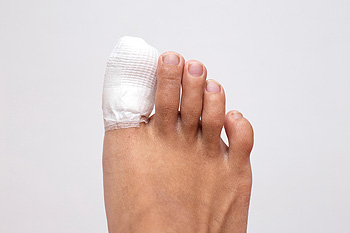 The bones that exist in the toes are fragile and small, and may easily break if a heavy object is dropped on them. Patients may realize their toe may be broken if it appears to be crooked, or if an open wound occurs after the injury happens. Additional symptoms may include pain, difficulty in moving the toe, and swelling. Mild relief may be found while elevating the foot, which may help to decrease swelling. It is suggested to keep the foot as still as possible, and this may be accomplished by resting the foot frequently during the day. Taping the injured toe to the toe next to it may provide stability while the healing process occurs. If you feel you have broken your toe, it is suggested that you consult with a podiatrist who can properly diagnosis and treat this condition.
A broken toe can be very painful and lead to complications if not properly fixed. If you have any concerns about your feet, contact one of our podiatrists from Romeo Foot & Ankle Clinic. Our doctors will treat your foot and ankle needs.
What to Know About a Broken Toe
Although most people try to avoid foot trauma such as banging, stubbing, or dropping heavy objects on their feet, the unfortunate fact is that it is a common occurrence. Given the fact that toes are positioned in front of the feet, they typically sustain the brunt of such trauma. When trauma occurs to a toe, the result can be a painful break (fracture).
Symptoms of a Broken Toe
- Throbbing pain
- Swelling
- Bruising on the skin and toenail
- The inability to move the toe
- Toe appears crooked or disfigured
- Tingling or numbness in the toe
Generally, it is best to stay off of the injured toe with the affected foot elevated.
Severe toe fractures may be treated with a splint, cast, and in some cases, minor surgery. Due to its position and the pressure it endures with daily activity, future complications can occur if the big toe is not properly treated.
If you have any questions please feel free to contact our offices located in Washington and Shelby Townships, MI . We offer the newest diagnostic and treatment technologies for all your foot and ankle needs.
Monday, 01 April 2019 00:00
What Causes Hammertoe?
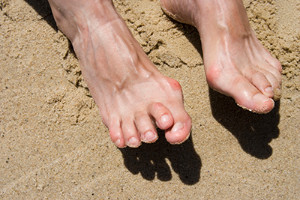 If you notice your middle toes are bent in a downward position, you may have what is referred to as hammertoe. The second toe is typically affected, and it may resemble a hammer as a result of the way it is bent. The most common reasons for hammertoes to develop may be from wearing footwear that does not fit correctly. These may include shoes which do not have ample room for the toes to move freely in. Additional reasons why this condition may develop may be genetic factors, or existing medical conditions which may include bunions or arthritis. Many people experience common symptoms when hammertoe has developed. These may include toe pain when the toes are stretched downward, toes that are curled, or thickened skin on the affected toe and surrounding areas. Hammertoes may be prevented by wearing shoes that fit correctly, and this often means choosing shoes that have adequate room for the toes to move about in. If you have this ailment, please consult with a podiatrist who can discuss proper treatment options with you.
Hammertoe
Hammertoes can be a painful condition to live with. For more information, contact one of our podiatrists from Romeo Foot & Ankle Clinic. Our doctors will answer any of your foot- and ankle-related questions.
Hammertoe is a foot deformity that affects the joints of the second, third, fourth, or fifth toes of your feet. It is a painful foot condition in which these toes curl and arch up, which can often lead to pain when wearing footwear.
Symptoms
- Pain in the affected toes
- Development of corns or calluses due to friction
- Inflammation
- Redness
- Contracture of the toes
Causes
Genetics – People who are genetically predisposed to hammertoe are often more susceptible
Arthritis – Because arthritis affects the joints in your toes, further deformities stemming from arthritis can occur
Trauma – Direct trauma to the toes could potentially lead to hammertoe
Ill-fitting shoes – Undue pressure on the front of the toes from ill-fitting shoes can potentially lead to the development of hammertoe
Treatment
Orthotics – Custom made inserts can be used to help relieve pressure placed on the toes and therefore relieve some of the pain associated with it
Medications – Oral medications such as anti-inflammatories or NSAIDs could be used to treat the pain and inflammation hammertoes causes. Injections of corticosteroids are also sometimes used
Surgery – In more severe cases where the hammertoes have become more rigid, foot surgery is a potential option
If you have any questions please contact our offices located in Washington and Shelby Townships, MI . We offer the newest diagnostic and treatment technologies for all your foot and ankle needs.
Blog Archives
- July 2024
- June 2024
- May 2024
- April 2024
- March 2024
- February 2024
- January 2024
- December 2023
- November 2023
- October 2023
- September 2023
- August 2023
- July 2023
- June 2023
- May 2023
- April 2023
- March 2023
- February 2023
- January 2023
- December 2022
- November 2022
- October 2022
- September 2022
- August 2022
- July 2022
- June 2022
- May 2022
- April 2022
- March 2022
- February 2022
- January 2022
- December 2021
- November 2021
- October 2021
- September 2021
- August 2021
- July 2021
- June 2021
- May 2021
- April 2021
- March 2021
- February 2021
- January 2021
- December 2020
- November 2020
- October 2020
- September 2020
- August 2020
- July 2020
- June 2020
- May 2020
- April 2020
- March 2020
- February 2020
- January 2020
- December 2019
- November 2019
- October 2019
- September 2019
- August 2019
- July 2019
- June 2019
- May 2019
- April 2019
- March 2019
- February 2019
- January 2019
- December 2018
- November 2018
- October 2018
- September 2018
- August 2018
- July 2018
- June 2018
- May 2018
